
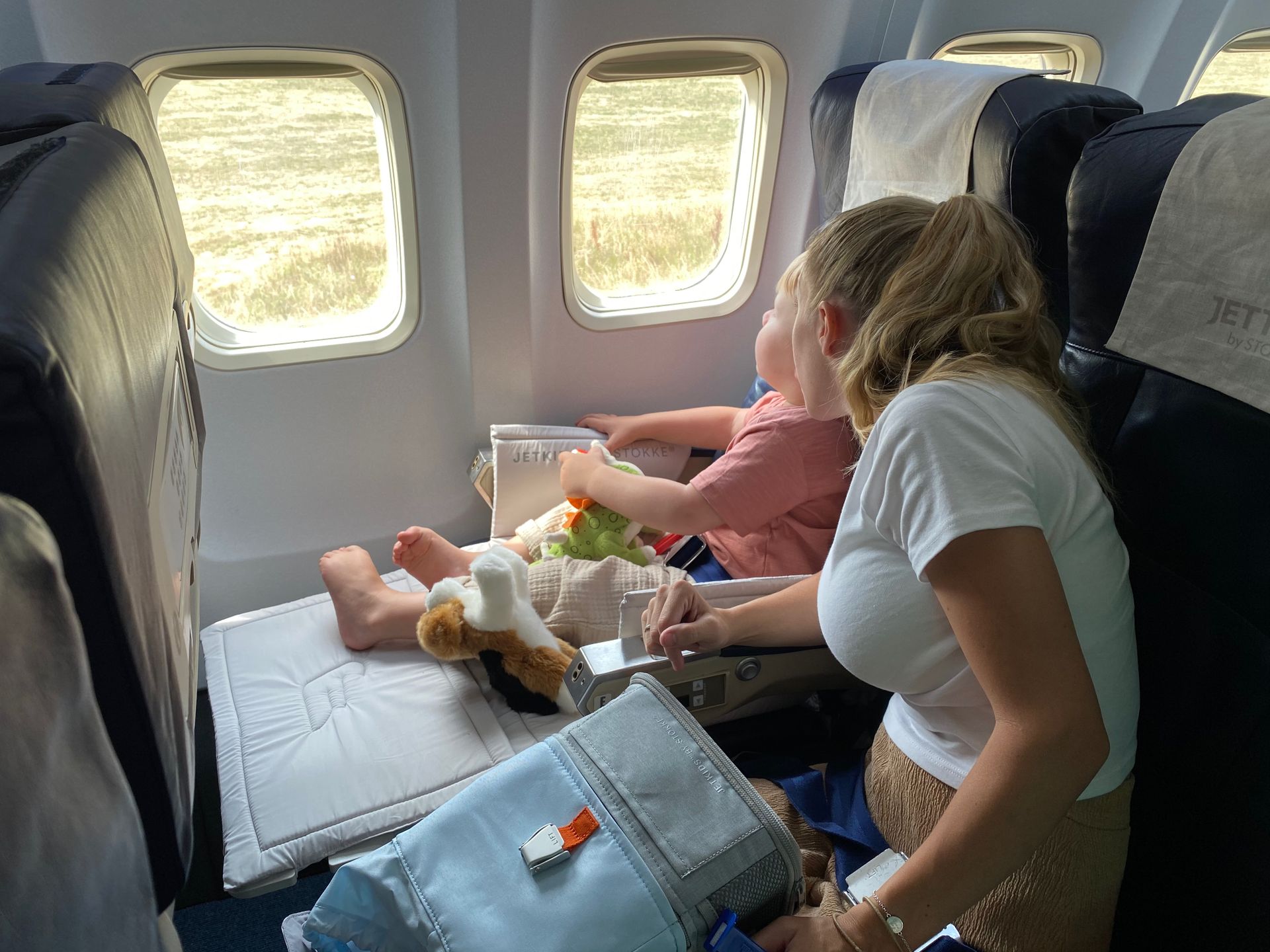
Quick answer: Basic fares usually save $20 to $60 per ticket, but families give much of it back in seat fees, bag fees and change fees, including a $150 per person change fee on JetBlue and no changes at all on United, Delta or American. We book basic only when the trip is short, plans are firm, and the gap survives the add-ons.
Basic economy was built for the solo traveler with a backpack and a fixed schedule. Families are neither. We travel with kids who need to sit next to an adult, bags that cannot all fit under a seat, and plans that shift when a child gets sick. The savings shrink fast once we price the whole trip instead of the headline fare. Below are the four traps we check before booking, the rules at the five big US carriers, and the cases where the cheap fare still wins.
Trap 1: Sitting together costs extra
The first trap is the seat map. On every basic fare below, picking a seat in advance costs money. If we skip the fee, the airline assigns seats for us, and nothing in the fare promises that a parent lands next to a child.
American charges for seat selection from the moment we book, and since May 18, 2026 that applies to AAdvantage elite members too. Delta waits longer: seat assignments on a Basic fare only go on sale 30 days before departure, and until then the seat map is closed. United lets us buy a seat, but a seat we do not buy is assigned before boarding and cannot be changed. Southwest assigns Basic seats at check-in, and JetBlue assigns Main Base seats before departure.
The family seating picture is better than the fare pages suggest, up to a point. American automatically seats children under 15 next to at least one adult on the reservation. JetBlue seats children age 13 and younger next to an accompanying adult when its conditions are met, including on Base fares, as long as everyone stays on one reservation. The US Department of Transportation family seating dashboard tracks which airlines guarantee fee free adjacent seating for children 13 and under. Delta states the opposite for its cheapest fare in plain words: passengers traveling together, including families, may not be seated together on Basic. And where a guarantee exists, it usually covers one adult next to one child, not our whole row.
Trap 2: Boarding last with kids and carry-ons
Basic fares board last almost everywhere. United Basic Economy boards in Group 6, Delta Main Basic in Zone 8, American Basic Economy in Group 9, and Southwest Basic and JetBlue Main Base sit in the last groups too. Status and the airline credit cards move us up on most of these, but the fare itself is at the back of the line.
For a family, late boarding is about overhead bin space. When the bins are full, carry-ons get checked at the gate, and the bag with the snacks and the change of clothes rides in the hold instead. United adds a sharper edge: on domestic flights, Basic Economy allows a personal item only. A full size carry-on is not permitted unless we hold Premier status or an eligible United credit card, which restores the carry-on and priority boarding. Bring one to the gate without that cover and it is checked for the bag fee plus a $25 gate handling charge. The other four airlines include a carry-on, but none can promise bin space to the last group on the plane.
Trap 3: Family plans change, and basic fares do not
Kids get ear infections. School calendars move. Basic fares assume none of it happens.
United Basic Economy allows no changes and no refunds outside the 24 hour booking window. Delta Basic is not changeable in most markets; we can cancel before departure for a $99 charge on US travel and apply what is left toward a new ticket. American does not allow changes either, though AAdvantage members can cancel for a $99 fee and keep the rest as a credit. JetBlue softened its rules when Blue Basic became Main Base for bookings after July 29, 2026: changes and cancellations are allowed at $150 per person, plus any fare difference. On a booking for four, that is $600 in fees. Older Blue Basic tickets are stricter, with no changes and cancellation fees of $100 or $200 per person.
Southwest looks gentler, because there is no change fee, but changing a Basic ticket requires upgrading to a higher fare. If we cancel, the flight credit expires six months from the day we booked, not the day we cancel, so a fare booked eight months out can leave a credit that is already dead.
Trap 4: The checked bag math
Families check bags, and basic fares know it. None of the five fares includes a free checked bag on domestic routes.
United charges $45 for the first bag when prepaid and $50 at the airport, same as standard economy. American charges Basic Economy passengers $5 more per bag than Main Cabin on tickets bought on or after May 18, 2026, so the first bag is $50 prepaid or $55 at the airport. Southwest charges $45 for the first bag and $55 for the second. JetBlue charges $45 for the first bag in off peak periods and $49 in peak periods when bought more than 24 hours ahead. Delta charges its standard bag fees on Basic.
The escape hatch is the airline credit card. On United, American, Southwest and JetBlue, the co-branded cards waive the first checked bag fee for the cardholder and companions on the same reservation, on basic fares too. A card we already hold can erase this entire trap.
The five basic fares, side by side
| Airline | Seat pick | Carry-on | Changes | Boarding |
|---|---|---|---|---|
| United Basic Economy | Paid; otherwise assigned before boarding | Personal item only on domestic flights; carry-on with status or a United card | Not allowed after the 24 hour window | Group 6, last |
| Delta Basic (Main Basic) | Paid, on sale only within 30 days of departure; otherwise assigned after check-in | Included | Not changeable; cancel for a $99 charge in the US, rest as credit | Zone 8, last |
| American Basic Economy | Paid from booking; otherwise assigned at check-in | Included | Not allowed; AAdvantage members can cancel for a $99 fee, rest as credit | Group 9, last |
| Southwest Basic | Assigned at check-in; A-List members and Southwest cardholders pick earlier | Included | Only by upgrading the fare; cancel for a credit expiring in 6 months | Last groups |
| JetBlue Main Base (was Blue Basic) | Paid; otherwise assigned before departure | Included | $150 per person, plus fare difference on changes | Last group |
When basic economy still wins
We still book basic fares, in the right spots.
The trip is short and the plans are set. On a two hour hop to visit grandparents, with dates locked by a school calendar, the change rules rarely matter. A fare gap of $40 or more per ticket, times four seats, is real money.
We carry on and pack light. On Delta, American, Southwest and JetBlue, the carry-on is included, so a family that packs carry-ons only and can live with assigned seats gives up very little. United is the exception we price carefully, because the personal item limit is the strictest rule in this article.
Our cards or status erase the traps. A United credit card restores the carry-on, priority boarding and a free checked bag. A Southwest card lets us pick a seat before check-in on a Basic fare. An American card covers the first checked bag and moves us out of Group 9. When the perks we already hold cancel out the restrictions, the basic fare is close to free money. The same stripped fare logic has now reached the front of the plane: we covered United First Base, the basic version of domestic first class, and the same test applies there.
The gap is genuinely wide. Sale fares sometimes put basic $75 or more below standard. At that size, we can pay for seats, check a bag, and still come out ahead.
Our verdict
For most family trips, we buy the standard fare. The saving is quoted per ticket, but the seat fees, bag fees and change fees are charged per person too, and they multiply across a family booking in the wrong direction. We book basic when the trip is short, the dates cannot move, we pack carry-ons, or our cards already cover the bags and boarding. Run that test at booking and the cheap fare becomes a discount we chose on purpose.
FAQ
Will the airline seat our kids next to us on a basic fare?
It depends on the airline. American seats children under 15 next to at least one adult automatically, and JetBlue seats children 13 and younger next to an adult when its conditions are met, including on Base fares. Delta warns that families may not sit together on Basic.
Can we bring a carry-on bag on basic economy?
On Delta, American, Southwest and JetBlue, yes, though bin space may be gone by the time the last group boards. United is the outlier: domestic Basic Economy is personal item only unless we hold Premier status or an eligible United credit card, and a carry-on brought to the gate is checked for the bag fee plus a $25 handling charge.
What happens if we need to cancel a basic economy ticket?
United allows nothing back outside the 24 hour booking window. Delta charges $99 for US travel and returns the rest as credit. AAdvantage members can cancel an American Basic Economy ticket for a $99 fee and keep the rest as credit. JetBlue Main Base charges $150 per person. Southwest returns a credit expiring six months from the booking date. Always cancel before departure, because a no show usually forfeits the ticket.
Do basic economy fares earn miles?
Barely, and at some airlines not at all. Delta Basic earns no miles or MQDs, and American Basic Economy earns no miles or Loyalty Points on tickets bought on or after December 17, 2025. United Basic Economy earns no miles for most members, though Premier members and United cardholders earn at reduced rates. JetBlue Main Base earns one base point per dollar instead of three, and Southwest Basic earns two points per dollar instead of six on Choice.
Does an airline credit card make basic economy worth it?
Often, yes. The co-branded cards waive the first checked bag fee on basic fares at United, American, Southwest and JetBlue, and improve boarding on several of them. A United card also restores the domestic carry-on. What no card restores is the right to change the ticket, so firm plans still matter most.
When should a family skip basic economy entirely?
When the trip is long, a checked bag per person is certain, dates might move, or sitting together in specific seats matters, such as with a nervous first time flyer. Then the standard fare is the cheaper product once every fee is counted.
Leave a Reply